Guide · water filter or water softener
Water filter or water softener? What is the difference?
You often hear the terms used interchangeably, but they solve two different problems. A water filter purifies your drinking water of contaminants, while a water softener removes limescale from the mains water to prevent mineral deposits in pipes and appliances. Read here how to choose what suits your situation.
What does a water filter do?
A water filter is intended for your drinking water. It removes substances that affect the taste, smell or quality of the water, such as chlorine, lead, pesticides, medicine residues, microplastics and PFAS. How well a filter works depends on the type of filter element and its certification. Reliable systems have their performance tested against public standards such as NSF/ANSI 42, 53 and 401. These test reports state the reduction percentages per substance. A good gravity filter, for example, removes more than 99 per cent of chlorine and more than 95 per cent of lead. For PFAS, reductions of more than 99 per cent are often achieved. You will always find the exact figures in the manufacturer's accompanying test report.
What does a water softener do?
A water softener targets hard mains water. Hard water contains a lot of calcium and magnesium. These minerals are harmless to your health and even essential for your body, but they do form limescale deposits in pipes, heating elements, washing machines and shower heads. Most water softeners work with an ion exchanger: calcium and magnesium ions are replaced by sodium ions (salts). This makes the water softer, but the composition of your drinking water, as far as contaminants are concerned, does not change. A water softener therefore does not improve the taste or the purity of your drinking water. It is a system for the whole home or for specific places such as the washing machine and the shower.
Limescale or contaminants? Choose based on your question
The choice depends on what you want to achieve. Do you want better water in terms of taste and health, and therefore protection against contaminants from the drinking water network? Then you choose a water filter. Do you suffer from limescale on your tap, in the shower or on your clothes after washing? Then a water softener may be the right step. Many households sometimes combine both systems: a softener for the whole house and a gravity filter for the drinking water. Note: if the water softener works with sodium ions (salts), this can affect the filter elements in your gravity water filter. These salts can clump together and clog the filter element. The flow is then reduced or stops altogether. As a result you have to replace the filter elements early. Some water softeners do this more than others. TIP: You can often draw off water before the water softener; use this water for the water filter.
Gravity filter or tap filter?
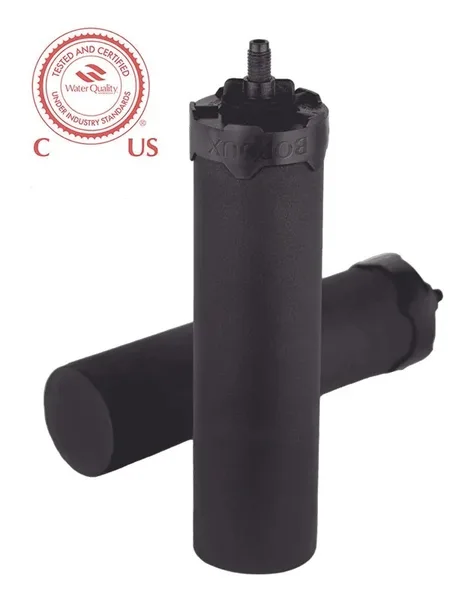
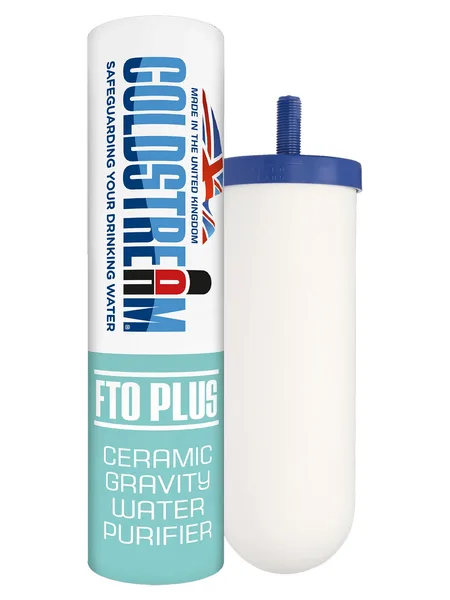
If you choose a water filter, there are various types. A gravity filter works without power or water pressure. The water drips through the filter element by itself and collects in a lower container. This system is ideal if you want to be flexible or do not want a connection to the tap (a connection to a tap often also gives lower filter performance). For anyone looking for a successor to the original Berkey system: BOROUX uses the same formula and Alternatievemiddelen.nl is the only dealer of this brand in Europe. And note that the famous ProOne G2.0 filter element is really called Coldstream FTO PLUS and comes from an English factory; Alternatievemiddelen.nl supplies this element too. British Berkefeld stopped selling through dealers, but existing systems simply carry on running on Coldstream FTO PLUS. Both brands work on the same gravity principle and supply certified filter elements. And you can fit them in almost all existing gravity water filters, including those of other brands.
In short. A water filter purifies your drinking water of contaminants such as chlorine, lead, microplastics and PFAS, with reduction percentages that are stated in public test reports. A water softener removes limescale from the mains water to protect appliances, but changes nothing about the quality of the drinking water. Choose based on your question: purifying or preventing scale build-up. For drinking water, a gravity filter is often the most practical and flexible solution.
From the shop
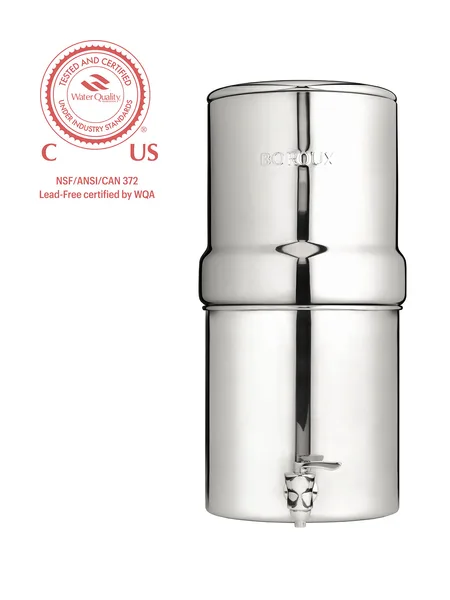
BOROUX
BOROUX Legacy Compact water filter 6.8L
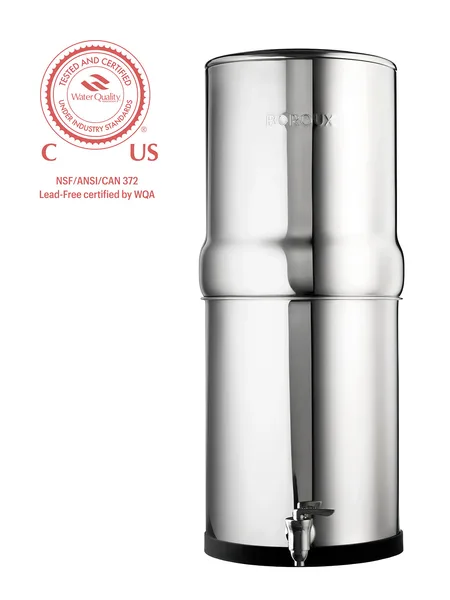
BOROUX
BOROUX Legacy water filter 11.4L
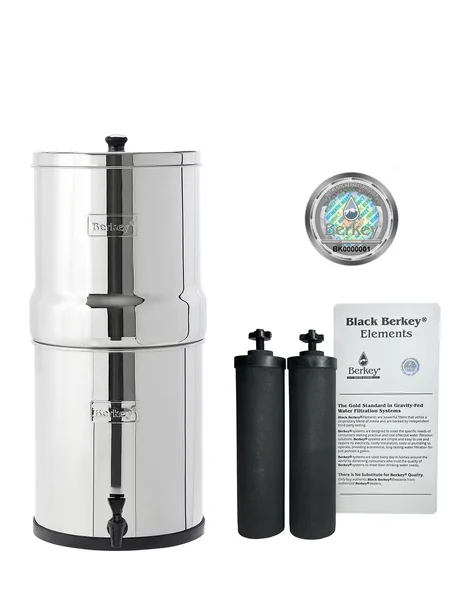
Berkey
Travel Berkey Water Filter 6L
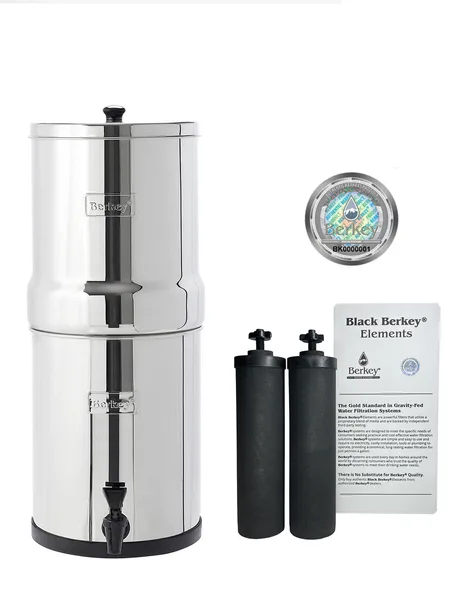
Berkey
Big Berkey Water Filter 8.5L
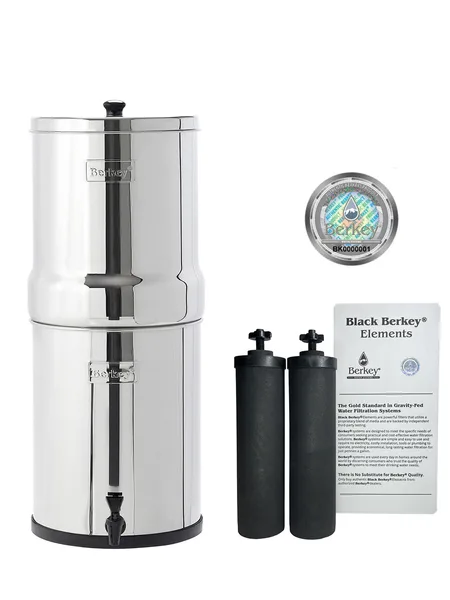
Berkey
Royal Berkey Water Filter 12.3L
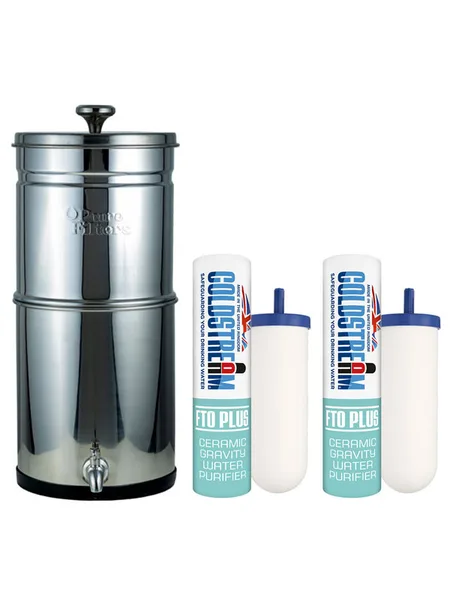
Pure Filters
Pure Filters Voyager Water Filter 6L (incl. 2x Coldstream FTO PLUS filter elements)
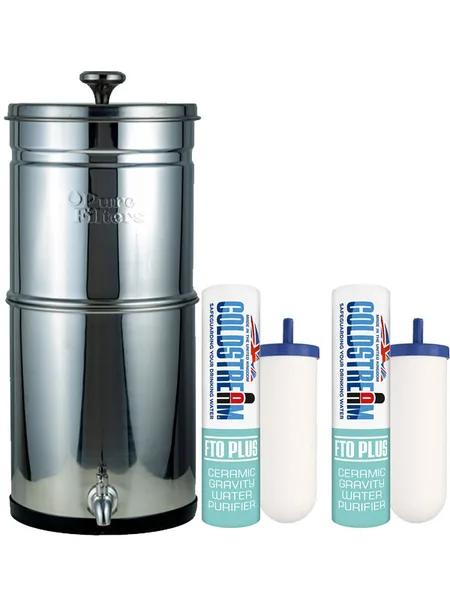
Pure Filters
Pure Filters Home Water Filter 9L (incl. 2x Coldstream FTO PLUS filter elements)
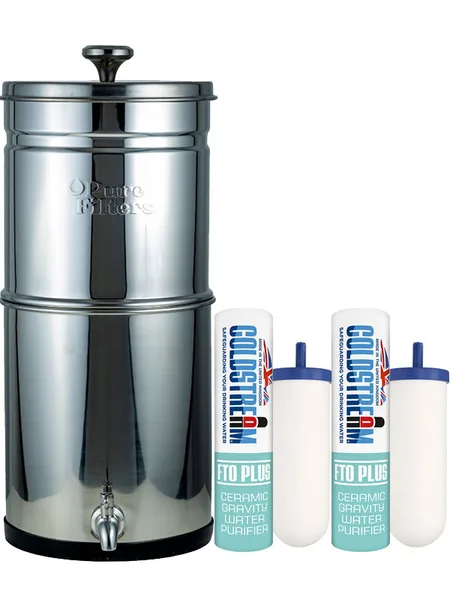
Pure Filters
Pure Filters Family Water Filter 12L (incl. 2x Coldstream FTO PLUS filter elements)
Berkey
BOROUX Foundation Black filter elements (2 pieces)
Coldstream
Coldstream FTO PLUS Water Filter Element
Which water filter should you buy? · How does a gravity filter work? · PFAS in tap water